
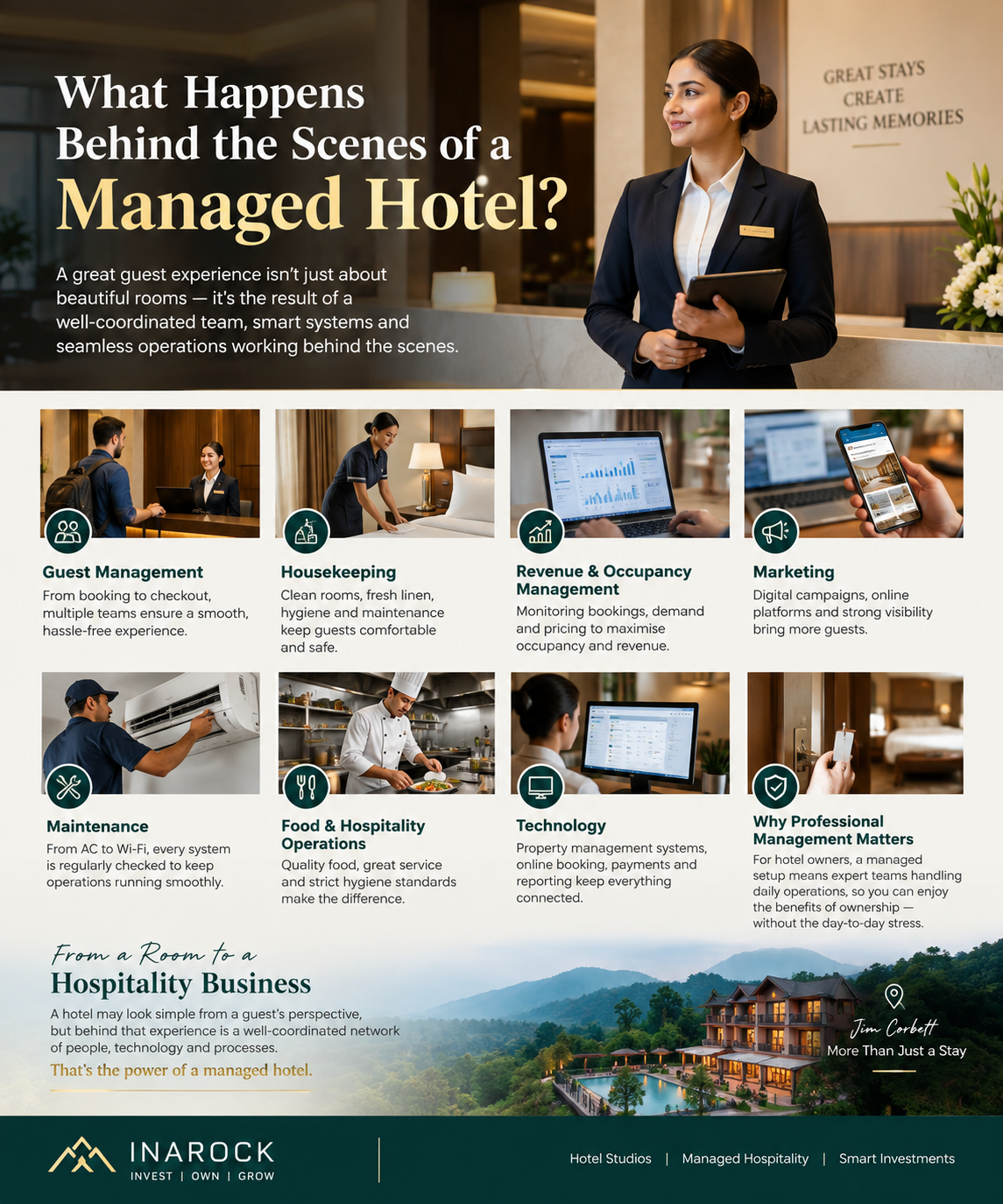
When guests check into a hotel, they usually notice the beautiful rooms, welcoming staff, clean surroundings, delicious food, and smooth service. But what makes all of this possible?
A successful hotel is much more than a building with rooms. Behind every comfortable stay is a complete management system working continuously to deliver a consistent guest experience.
## 1. Guest Management Comes First
From the moment a guest makes a booking until checkout, multiple teams are involved.
Reservations, front-office staff, housekeeping, customer support, and operations work together to ensure that guests receive a smooth experience. Quick check-ins, clean rooms, timely assistance, and professional communication all contribute to guest satisfaction.
## 2. Housekeeping Keeps Everything Guest-Ready
A hotel room needs to be ready before every new guest arrives.
Housekeeping teams manage room cleaning, linen changes, bathroom hygiene, amenities, common areas, and regular maintenance coordination. Their work often happens behind the scenes, but it has a direct impact on the guest experience.
## 3. Revenue & Occupancy Management
One of the most important parts of hotel operations is managing room inventory and occupancy.
Hotels continuously monitor bookings, seasonal demand, weekends, holidays, local events, and guest trends. Based on demand and applicable pricing strategies, room rates and availability may be managed to optimise occupancy and revenue.
## 4. Marketing Brings Guests to the Property
Even a well-managed hotel needs visibility.
Digital marketing, online travel platforms, social media, promotional campaigns, partnerships, and direct bookings can all contribute to generating demand.
A hotel's online presence, reviews, photographs, offers, and guest experience can influence future bookings.
## 5. Maintenance Never Stops
Behind a comfortable hotel stay is continuous maintenance.
From air conditioning and plumbing to electrical systems, furniture, appliances, Wi-Fi, and common areas, hotel teams need to identify and resolve issues quickly so that operations remain smooth.
## 6. Food & Hospitality Operations
For hotels offering restaurants, breakfast, room service, or other food facilities, another complete operation works behind the scenes.
Kitchen teams, service staff, inventory managers, and hygiene teams coordinate to maintain food quality and service standards.
## 7. Technology Plays a Major Role
Modern hotels rely heavily on technology.
Property management systems, online booking platforms, payment systems, customer databases, housekeeping software, and reporting tools help management track reservations, rooms, revenue, and operational activities.
Technology allows different departments to coordinate more efficiently.
## 8. Why Professional Management Matters for Hotel Owners
For someone investing in a hotel studio, the biggest difference between simply owning a room and owning a professionally managed hospitality asset can be the management structure.
A managed hotel can have dedicated teams handling day-to-day operations, guest services, housekeeping, marketing, maintenance, and other hospitality functions according to the property's management model.
This allows the owner to participate in the ownership opportunity without personally handling every operational responsibility.
## From a Room to a Hospitality Business
A hotel may look simple from a guest's perspective: arrive, check in, stay, and check out.
Behind that experience, however, is a coordinated network of people, technology, processes, and management decisions.
That is what makes **managed hotel ownership** different from simply owning a conventional property.
For investors exploring hotel studios in destinations such as **Jim Corbett**, understanding what happens behind the scenes can be just as important as understanding the room itself.
**Because in hospitality, the experience guests see is only one part of the story—the real operation happens behind the scenes.**